

An extra hour is on the calendar for the OLLU community. Daylight saving time ends Sunday, Nov. 1, at 2 a.m., when clocks move back one hour to 1 a.m., marking the return to Central Standard Time.
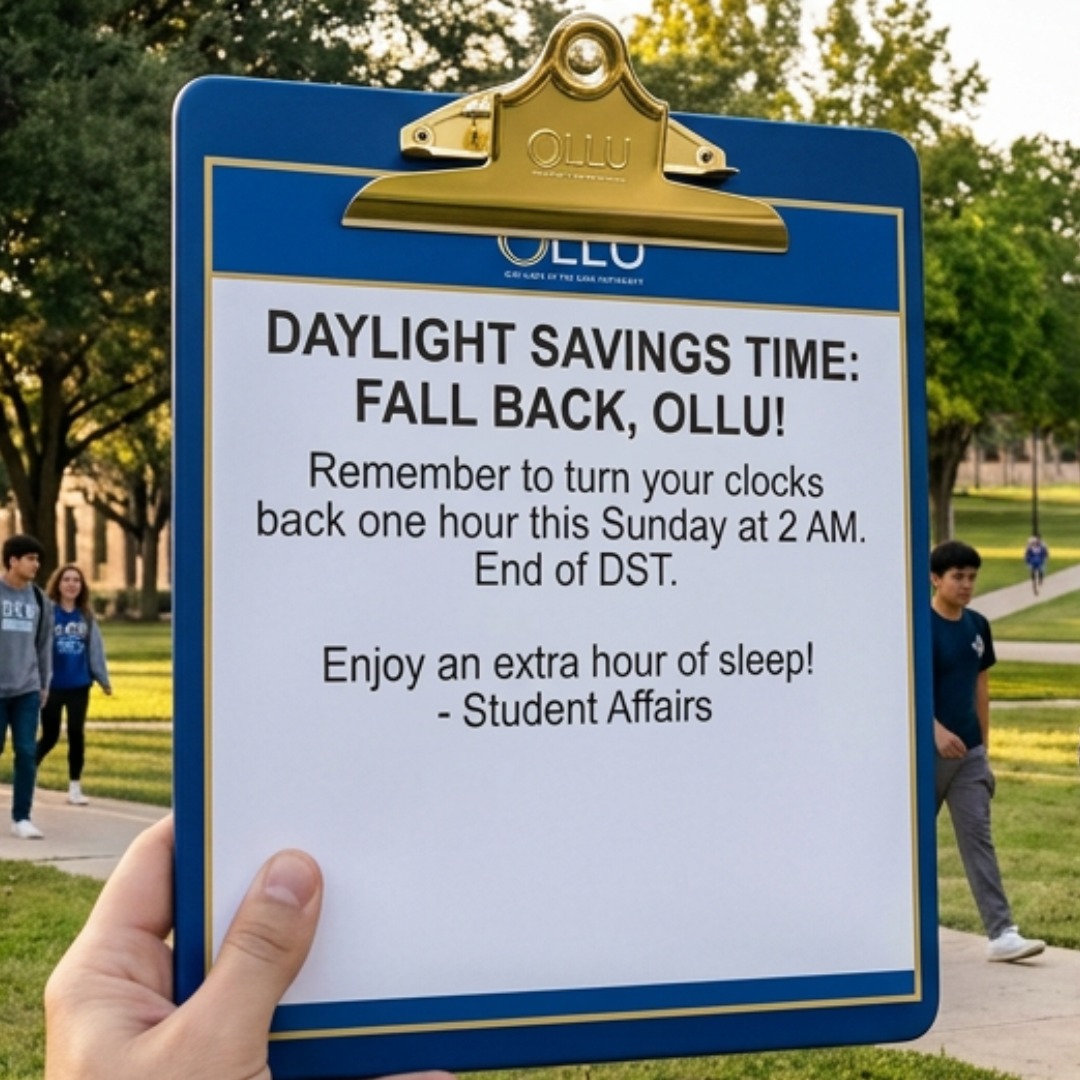
Before heading to bed on Saturday, Oct. 31, remember to set manual clocks back one hour. Many smartphones and internet-connected devices adjust automatically, but check their settings to ensure your Sunday schedule stays on track.
The shift to standard time in autumn gives you an extra hour of sleep but leads to much earlier sunsets, which can trigger seasonal sluggishness or mood drops.
To ease the transition, the American Academy of Sleep Medicine recommends allowing at least seven hours of sleep each night for adults and gradually adjusting sleep schedules before the change. Keeping consistent bedtimes and wake-up times can also help your body settle into the new schedule.
Other tips for the “fall back” transition of darker evenings include:
- Maximize morning light: Seek out bright sunlight immediately upon waking. This resets your circadian rhythm and boosts daytime alertness.
- Gradually delay bedtime: In the days leading up to the switch, push your bedtime and meal times 15 minutes later each night to help your body adapt.
- Stay active in the afternoon: Exercise or go for a brisk walk during your lunch break or early afternoon to combat the “sunset slump” when darkness hits.
- Keep indoor spaces bright: Turn on overhead lights at home in the late afternoon to mimic daytime and prevent early melatonin production that causes premature drowsiness.
- Supplement mindfully: If you experience significant mood shifts due to early darkness, consult a healthcare provider about using a 10,000-lux light therapy box or taking Vitamin D.
So, fall back, Saints! Set those clocks, enjoy the extra hour and head into November ready to shine—even when the sun clocks out early.