Early Voting Has Started at OLLU!

Make your voice heard! Early voting has officially started, and Our Lady of the Lake University (OLLU) is helping students and the San Antonio community get ready to make their voices count.

This year, OLLU partnered with Bexar County to promote voter registration, civic education and student engagement through its Voter Registration and Early Voting Initiative. Led by the Center for Service-Learning and Volunteerism, the campaign connects students with the resources, information and support they need to participate confidently in the democratic process.

The initiative kicked off in August with registration opportunities during residence hall move-in, the Saints Organization Fair and Community Hour. Additional outreach tied to National Voter Registration Day, Constitution Day and Service Saturday helped encourage participation, with support from community partners including the League of Women Voters and West End Hope in Action.

Through collaboration with Bexar County Commissioner Justin Rodriguez’s office, OLLU strengthened its efforts to provide voter registration materials, educational resources and engaging activities that encourage students to get involved.

As an early voting site, OLLU also offers a convenient, familiar location for students, employees and West Side residents to cast their ballots. The university recognizes that busy schedules, unfamiliarity with voting procedures and questions about polling locations can create barriers, so its outreach focuses on making the process more accessible and understandable.

“At OLLU, we believe higher education is about more than preparing students for a career. It’s also about preparing them to become informed, engaged citizens who can positively impact their communities,” said Clarissa Vega, director of Strategic Initiatives and Government Affairs.

Voting is about more than choosing elected officials. Ballot measures and local bond proposals can directly affect public safety, community resources and everyday life.

Now is the time to make a plan, learn about the ballot and get ready to vote!

Your voice matters. Your vote matters. Make it count!

A Message From the President

Dear OLLU Saints,

As the Board Chair shared last Friday, I will conclude my service as President of Our Lady of the Lake University on December 31. I will be on campus through October 31, and I leave with deep gratitude and confidence in OLLU’s future, because our university is much stronger today than five years ago and we have begun to tackle the challenges facing communities and higher education.

When I arrived at OLLU nearly five years back, I understood the significance of becoming our University’s 10th president and its first Latino to serve in this capacity. What I could not have understood then was how profoundly this place, its people, and the charism of Divine Providence would shape me.

I came to our university carrying a story that many of our students know well. Son of immigrants, roots in a border town, first in my family. My own educational journey began at a community college before eventually leading me to a doctoral degree and, improbably, to serving OLLU as its president.

At its core, my journey has been about changing a family’s trajectory. About the parents who sacrificed so their child could have an opportunity they did not. About the student balancing academics, the first-generation student trying to decipher a system no one in their family has navigated, and the graduate who walks across the stage knowing the diploma carries far more than the name printed on it.

Over these almost five years, we have asked much of one another. We worked towards restoring financial strength, changed several processes, challenged ourselves to become more disciplined, more accountable, more innovative, to raise our and everyone’s standard, and remain more focused on what today’s students need from us. And together, we have moved OLLU forward.

Indeed, together we strengthened undergraduate retention, and graduation rates, and philanthropic and grant funding. Together, we worked to restore financial strength while navigating extraordinary external challenges. Together we began to realign our academic portfolio around student opportunity and workforce demand. Together we modernized technology and institutional processes. Together we strengthened partnerships throughout San Antonio, South Texas, and beyond. Together we watched our student-athletes win national championships while becoming stronger students in the classroom.

All the while, we remained mission-focused as we created. The Futuro Leaders Scholars Program was a seed for first-generation students because they deserve more than access; they deserve investment, mentorship, and the expectation that they will become leaders. Lake Express is one answer to questions about the cost and value of higher education. We demonstrated that a rigorous bachelor’s degree can be reimagined around the lives and needs of today’s students. We invested in new programs, new partnerships, new technologies, new approaches to student success, and new ways of thinking about what OLLU can become. We did this knowing that not every idea works perfectly the first time. And yet, we kept moving.

And when I say we, I mean it. A president does not retain a student. A president does not teach a class, coach a team, process an application, counsel a student in crisis, raise every dollar, repair buildings, clean classrooms, or make every family feel welcomed.

People do. You did. And you do this every day.

One of the greatest gifts OLLU gave me was a deeper understanding of Providence. That commitment will forever be with me. Providence has taught me that we do not always get to see the entire road before us. Many times through our journeys we are asked instead to discern what is ours to do, to have the courage to do it, and to trust that our work becomes part of something larger than ourselves.

There is work we began that I will not be here to finish; you will. Be carriers of Providence, as we are all temporary stewards of something entrusted to us by those who came before and something we have an obligation to leave stronger for those who come next.

I leave this presidency enormously proud of what we accomplished together, but even more grateful for the people with whom I had the privilege to accomplish it.

Students: never allow where you started to determine where you are permitted to go. Your education belongs to you, but what you do with it can change generations.

Faculty and Staff: thank you for doing the difficult and deeply human work upon which our OLLU depends. Continue asking hard questions, putting students first, and having the courage to change when mission demands it.

Trustees: thank you for the time, wisdom, and care you give OLLU as volunteers. Your commitment to our students and our mission has inspired me, and I am deeply grateful.

Sisters: thank you for trusting me with something you have invested generations building. More importantly, thank you for helping me understand Providence as a way of living.

Entire Community: thank you for allowing this first-generation college student and son of immigrants the extraordinary privilege of becoming President of Our Lady of the Lake University.

There is a question I have increasingly found myself asking students, and you:

¿Qué tipo de ancestro quieres ser? (What kind of ancestor do you want to be?)

Our work is about the OLLU we are preparing for the generations who will come after us.

May they find that we were good ancestors.

With profound gratitude,

Abel A. Chávez, MBA, Ph.D.

President

Did You Know?

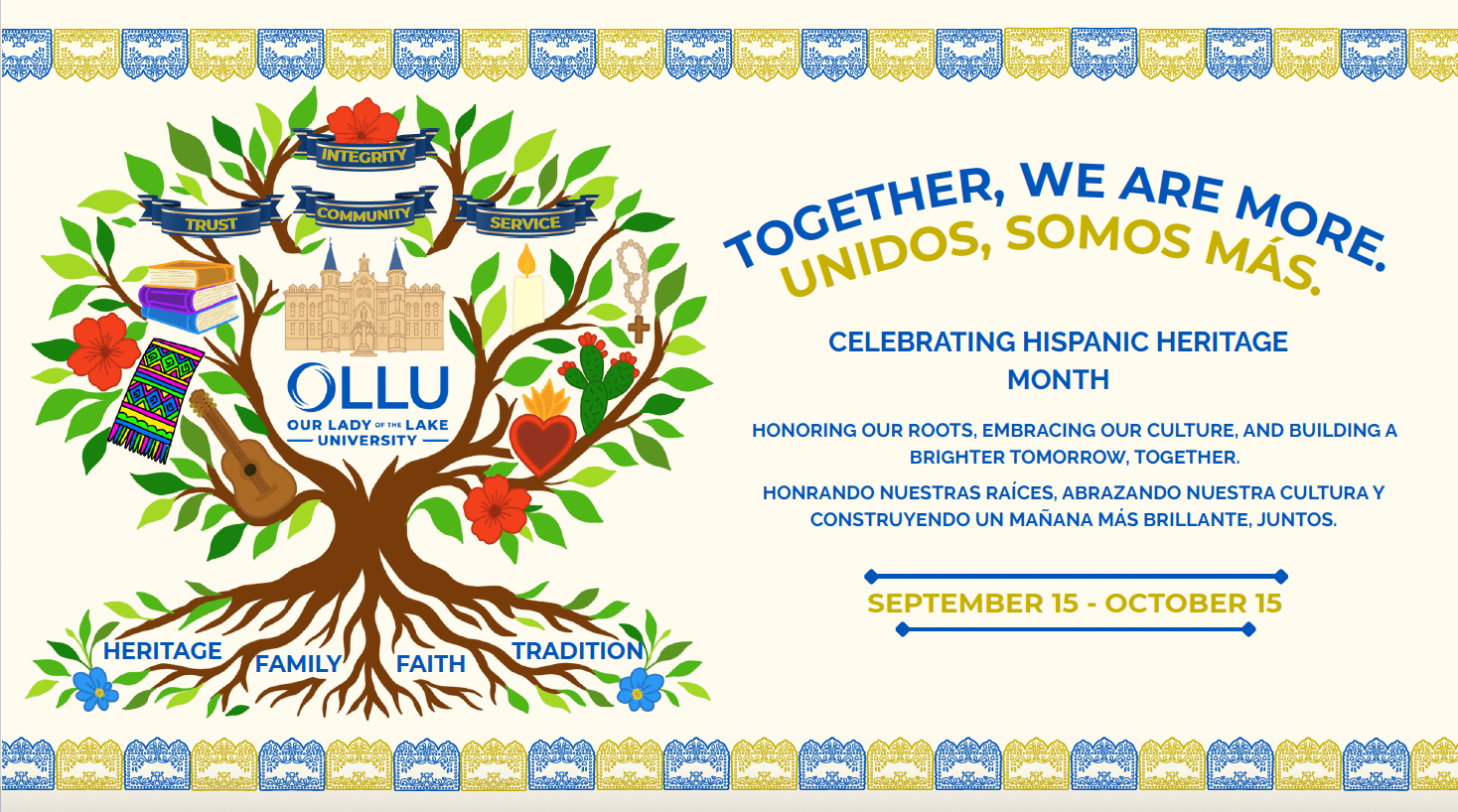
With the end of Hispanic Heritage Month this week, here are a plethora of factoids recognizing Hispanic culture and OLLU pride!

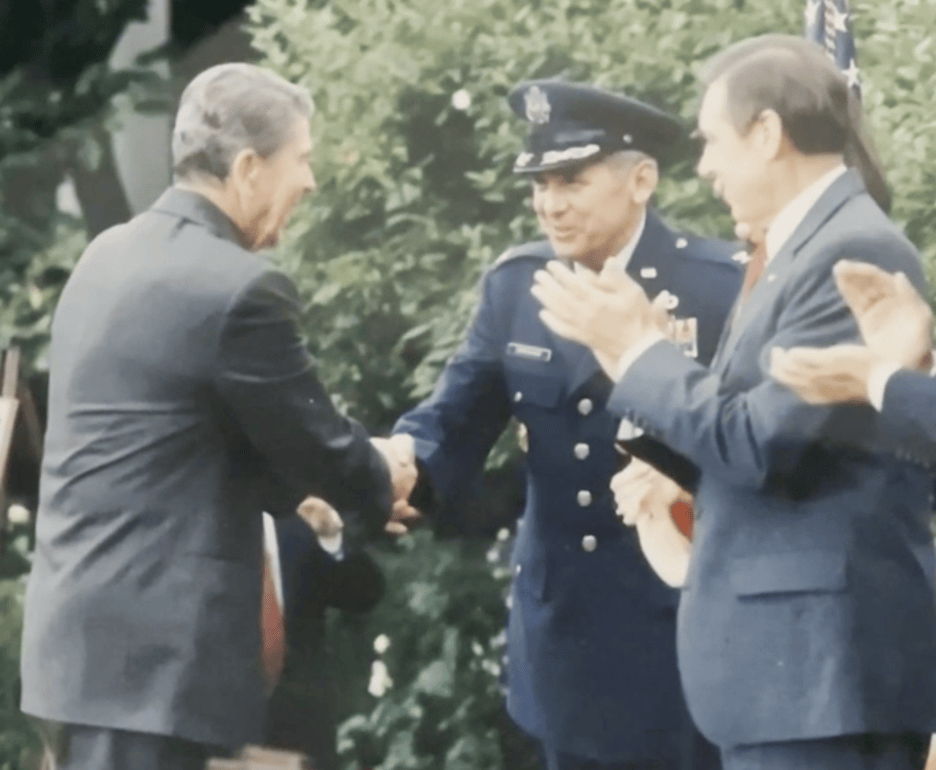
President Ronald Reagan shaking hands with OLLU Alum Colonel Gil Coronado

• Hispanic Heritage was celebrated for only a week.  It was established in 1968 by then President Lyndon B. Johnson as a weeklong celebration.  OLLU Alum Gil Coronado changed that in 1988 when President Ronald Reagan expanded it to a full 30-day period.

• What did Hispanics influence?

o Cowboys and Rodeos: Many iconic American cowboy traditions actually originated in Spain and Mexico – including cowboy hats and the rodeo itself!  Remember that when the Rodeo comes to San Antonio in February of 2027.

o State names: Although their pronunciation has changed, many U.S. state names are from the Spanish language.  Colorado was named for its red color; Montana was named for its mountainous landscape; Nevada for its snow-covered territory; Florida for its flowery vegetation.  

o Florida’s recorded history starts in 1513 when Spanish conquistador Juan Ponce de León arrived in the Easter season and referred to the region as “La Pascua Florida,” (meaning the ‘flowery Easter”)

o The Sandia Mountains in New Mexico were given that name for their color during a sunset.  ‘Sandia’ means watermelon in Spanish.

o A Food Takeover: More than 30 years ago, salsa officially overtook ketchup as the top-selling, most popular condiment in the United States.

o Guacamole, or “Guac,” is a word from the Nahuatl term “āhuacamōlli,” which means avocado sauce.  ‘Ahuacatl’ meaning avocado, and ‘molli’ meaning sauce.  Guacamole is quickly becoming a must-have appetizer.  

o The origin of Barbecue comes from the Spanish word, “barbacoa,” which was adopted from Caribbean origins.  However, while it’s not a historical fact, San Antonio was the first to offer Barbacoa and Big Red!

o Caesar Salad is not a tribute to a Roman Caesar; it was actually invented in Tijuana, Mexico, in the 1920’s 

o “Chocolate” comes from the Nahuatl word “chocolātl spoken by Aztecs.  They drank chocolate as a bitter, spiced beverage long before it became the sweet chocolate we know today.  The cacao beans, where chocolate comes from, were so valuable that Aztecs used them as currency as well as for food.

o Vanilla originated in Mexico and was first cultivated by the Totonac people centuries before it became a global flavoring.  So, now, whether you choose chocolate or vanilla, you’ll be choosing a bit of Hispanic culture.

o Maybe by next year, we’ll be proud to report that breakfast tacos have replaced breakfast cereals!

Walk With the President: OLLU Steps Up for Exercise is Medicine Month

Our Lady of the Lake University will put wellness in motion throughout October as students, faculty and staff take part in Exercise is Medicine® On Campus Month, culminating in a campus-wide President’s Walk on Wednesday, Oct. 28.

The President’s Walk, beginning at 9 a.m., will serve as the signature event of OLLU’s monthlong activities and bring the Saints community together for an hour dedicated to movement, wellness and connection.

OLLU President Abel A. Chávez, MBA, Ph.D., is encouraging students, faculty, staff and administrators across campus to step away from their regular duties and responsibilities from 9-10 a.m. to participate in the walk. The event will also highlight the positive impact physical activity can have on learning, creativity and overall well-being.

Participants can expect a festive atmosphere along the route, with snacks and water, OLLU’s spirit team, student organization stations and motivational and humorous signs, similar to those seen along marathon routes.

The President’s Walk is part of the national Exercise is Medicine On Campus Walking Challenge, which encourages participating campuses to accumulate as many walking or wheelchair miles as possible during an eight-hour period.

OLLU is the only San Antonio university participating in the official Exercise is Medicine On Campus competition.

“Exercise is Medicine Month is an opportunity to bring our entire campus community together around something that directly affects our health and quality of life — movement,” said Dr. Emily Sauers, OLLU Kinesiology Program Head and organizer of OLLU’s Exercise is Medicine activities. “The President’s Walk gives us a chance to come together as Saints, step away from our daily routines and experience firsthand how movement can support our physical health, learning, creativity and overall well-being.”

OLLU has already demonstrated that Saints know how to get moving. During the 2024 EIM Walking Challenge, OLLU placed fifth nationally, with 149 participants logging 343.3 miles.

Other Exercise is Medicine activities throughout October will help build momentum toward the President’s Walk.

On Oct. 13 and 15, from 11 a.m.-12:30 p.m., students in OLLU’s fitness testing courses will conduct cardiovascular risk assessments for faculty, staff and administrators. Organizers are also working with Phil Vargas to explore participation by Next Level Care.

From Oct. 26-30, fitness testing students will offer Exercise is Medicine activities during Community Hour, providing additional opportunities for members of the OLLU community to incorporate movement into their day.

Faculty, staff, students and administrators are encouraged to participate throughout October — and especially to join President Chávez on Oct. 28 — as OLLU works to build on its previous national Walking Challenge success.

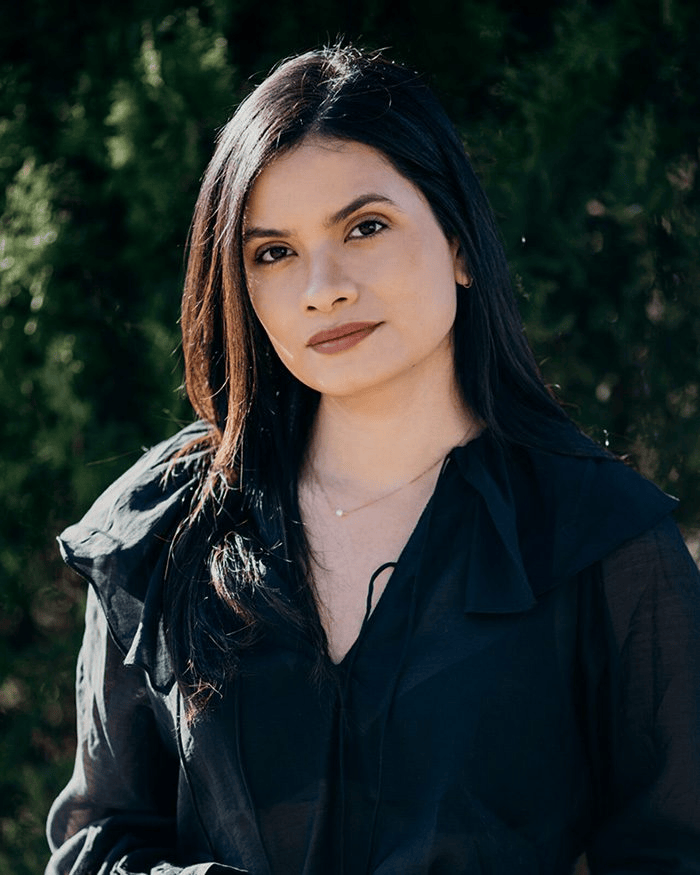
From OLLU’s West Side Campus to the BBC: Alumna Angélica Casas Brings Local Voices to a Global Audience

San Antonio native credits OLLU’s faith-based education, mentorship and student journalism opportunities for helping launch an international journalism career

For Angélica Casas, the road to becoming a senior video journalist with BBC News began on San Antonio’s West Side, where a university grounded in faith, community and service helped a young Latina discover that her aspirations extended far beyond what she once imagined possible.

Today, the Our Lady of the Lake University (OLLU) alumna reports on some of the nation’s most consequential stories for an international audience, from immigration and natural disasters to mass shootings and the resilience of communities facing extraordinary challenges.

But despite nearly a decade with one of the world’s most recognized news organizations, Casas has never forgotten where her journey began.

Born and raised in San Antonio by a single mother, Casas grew up knowing that a college education would require determination, scholarships and financial assistance. She and her twin sister worked hard academically, understanding that their futures depended largely on the opportunities they could create for themselves.

When choosing a university, Casas was drawn to OLLU for its Catholic identity, predominantly Hispanic student population, location on the West Side and generous financial aid package.

“The fact that there is an institution that’s also majority Hispanic and also rooted in faith was very important to me,” Casas said.

Beyond those practical considerations, she found something equally meaningful: a sense of belonging.

“The West Side has always felt like home to me,” she said, recalling her family connections and her parish, St. Jude Catholic Church. “It just felt like home, really. And even throughout my four years, that’s what it always felt like.”

Finding Her Voice at OLLU

Casas arrived at OLLU already interested in journalism, a passion that developed while working on her high school newspaper. Although naturally introverted, she discovered that reporting gave her the confidence to approach strangers, ask questions and learn about their experiences.

At OLLU, that curiosity evolved into professional skills through classroom instruction, internships and hands-on reporting for The Lake Front, the university’s student newspaper.

Professor Kay O’Donnell encouraged Casas to join the newspaper during her first year. She remained involved throughout college, eventually serving as editor-in-chief during her junior and senior years.

Leading the student newsroom proved transformative.

“That played a huge role in my confidence as a reporter and also just gaining so much leadership skills from then being able to lead a small newsroom,” Casas said.

The experience taught her how to manage reporters, provide editorial feedback and make decisions about news coverage — responsibilities remarkably similar to those she now holds at the BBC.

Casas also credits Spanish professor Dr. Maribel Larraga for encouraging her to pursue Spanish-language journalism opportunities and strengthening her connection to her cultural identity.

Through internships with local Spanish-language and bilingual news publications, including La Prensa and the San Antonio Express-News’ Conexión, Casas developed a deeper understanding of the importance of serving communities that might otherwise be overlooked by mainstream news organizations.

Growing up with an immigrant mother who relied on Spanish-language news further reinforced that commitment.

Her experiences studying, traveling by VIA bus and conducting interviews throughout the West Side helped shape the journalist she would become.

“I was always walking through the West Side streets and getting to know a lot of people, even at the bus stop,” she recalled.

Those experiences inspired a larger ambition: to work in national or international journalism while continuing to tell stories about communities like the one that raised her.

Opening Doors Beyond San Antonio

Another important turning point came through OLLU’s McNair Scholars Program, which introduced Casas to graduate education and opportunities she had never considered attainable.

Through campus visits, mentorship and guidance with scholarship and graduate school applications, the program helped her envision a future beyond San Antonio.

After graduating from OLLU in 2015 with degrees in Mass Communication and Spanish, Casas continued her education at the University of California, Berkeley, where she earned a master’s degree in journalism.

It was her first time living away from home.

Yet she arrived confident in her abilities, thanks to the practical experience and leadership opportunities she received at OLLU.

“I just felt so prepared to hit the road running with reporting because of what I learned at OLLU,” she said.

While at Berkeley, Casas interned at the San Francisco Chronicle and pursued reporting opportunities throughout the United States and Mexico. Those experiences eventually helped open the door to BBC News, which she joined in 2017.

Looking back, she sees the progression from OLLU to Berkeley to the BBC as interconnected, with each opportunity building upon the previous one.

Reporting the Stories That Matter

Now based in her hometown, Casas is one of the BBC’s few U.S. journalists working outside its major newsroom hubs and serves as the organization’s Texas-based correspondent for video reporting.

Her responsibilities extend well beyond conducting interviews and producing video stories. As a senior video journalist, she also helps oversee other journalists, provides editorial guidance, commissions stories and contributes to decisions about video coverage published on the BBC’s digital platforms.

Her reporting has taken her to the front lines of some of the country’s most difficult events, including the Uvalde school shooting, catastrophic flooding in the Texas Hill Country and the 2019 mass shooting at an El Paso Walmart.

That El Paso assignment remains among the most emotionally difficult of her career.

As a Latina journalist, Casas found the tragedy particularly personal. Yet amid the grief, she also witnessed powerful expressions of solidarity and hope, including a mariachi performance of “Amor Eterno” at a vigil honoring the victims — footage she captured that subsequently went viral.

“I feel like in the middle of tragedy, I was able to capture a lot of hope in my reporting as well,” she said.

While much of her work involves covering tragedy and difficult circumstances, Casas is equally committed to documenting resilience. During the COVID-19 pandemic, for example, she reported on San Antonio families confronting loss, health challenges and uncertainty, highlighting how communities persevered.

Her approach to video storytelling emphasizes authenticity and allowing people to share their experiences in their own words.

“I just let people speak for themselves,” she said. “I want my video to really transport the audience to these places.”

Bringing a Different Perspective to the Newsroom

Casas acknowledges that establishing herself in international journalism was not without challenges.

When she joined the BBC, she was the only Latina and Spanish speaker in her newsroom. At times, she questioned whether she belonged, experiencing the self-doubt often described as imposter syndrome.

Rather than abandon her perspective, she leaned into it.

She consistently advocated for stories about Latino communities, immigration and people whose experiences were not always reflected in national news coverage.

Her cultural identity and upbringing became assets that helped broaden the perspectives represented in the newsroom.

For Casas, being a journalist from San Antonio’s West Side is not something she has had to overcome. It is central to what makes her reporting meaningful.

Advice for the Next Generation of Saints

For OLLU students hoping to follow in her footsteps, Casas emphasizes two essential qualities: curiosity and adaptability.

“Definitely curiosity,” she said. “I feel like I wouldn’t have gotten to the level of reporting that I do if not for curiosity and just being genuinely open to asking questions and to wanting to learn more.”

She also encourages students to remain flexible as technology, storytelling formats and audience habits continue to transform journalism.

Most importantly, she wants students — particularly those who may question whether prestigious opportunities are within reach — to recognize the value of their own experiences.

“I would tell them to look at my story,” Casas said. “I think it’s possible as long as you’re confident in what you want to do.”

Her message is grounded in the same values that guided her as an undergraduate: remain authentic, stay connected to your community and never underestimate the education and experiences gained at OLLU.

“Just don’t lose yourself in the process,” she said.

Today, Casas is back in San Antonio, telling Texas stories for a global audience while continuing to draw on the foundation she developed at OLLU.

Her connection to the university remains deeply personal. She still proudly displays an OLLU alumni license plate frame on her car, a small but meaningful reminder of the institution that helped shape her future.

For Casas, being a Saint means carrying forward the values of faith, service and education — no matter how far a career may take her.

“Service has always been at the heart of the type of journalism that I want to do,” she said. “And I learned that from my time at Our Lady of the Lake.”

HACU Returns to OLLU to Celebrate 40 Years of Impact

The Hispanic Association of Colleges and Universities (HACU) returned to Our Lady of the Lake University on Wednesday, Oct. 7, to celebrate its 40th anniversary on the campus where the organization was founded in 1986.

OLLU welcomed HACU leaders, higher education representatives and community partners for a celebration featuring a mariachi birthday serenade, a press conference, recognition from the City of San Antonio and a panel discussion exploring HACU’s legacy and future. The event also honored HACU President and CEO Antonio R. Flores for 30 years of service as he prepares for retirement. The celebration concluded with a dedicated Mass at Sacred Heart Conventual Chapel.

“When HACU began 40 years ago, our founders understood that institutions serving large numbers of Hispanic students needed a strong, unified voice,” Flores said. “That need has not diminished, it has grown.”

Established by 18 institutions, including OLLU, HACU helped secure federal recognition of Hispanic-Serving Institutions in 1992. The association reports that its advocacy has helped generate more than $3.3 billion in grants since 1995, while its National Internship Program has facilitated nearly 15,000 paid placements since 1992.

OLLU’s connection to HACU continues through its participation in the 2026–27 VOLARÉ Institute, a yearlong initiative helping University leaders strengthen research capacity and competitiveness for external funding.

The anniversary celebrated both HACU’s national impact and OLLU’s enduring role in expanding educational opportunity for Hispanic students and the institutions that serve them.

Did You Know?

Hispanic Heritage Month begins on Sept. 15 for a meaningful reason: the date marks the anniversary of independence for five Latin American countries — Costa Rica, El Salvador, Guatemala, Honduras, and Nicaragua.

The celebrations continue with Mexico’s Independence Day on Sept. 16 and Chile’s on Sept. 18, making mid-September an especially significant period in Latin American history.

The monthlong observance continues through Oct. 15, a period that also includes Oct. 12. In many Spanish-speaking countries and communities, Oct. 12 has historically been recognized as Día de la Raza, or “Day of the Race,” while in the United States the date is increasingly observed as Indigenous Peoples’ Day.

Together, these dates help explain why Hispanic Heritage Month spans two months on the calendar, creating an opportunity to recognize the histories, cultures and contributions of Hispanic and Latino communities across the Americas.

OLLU Students Help Westside Senior Age in Place Through Service Saturday

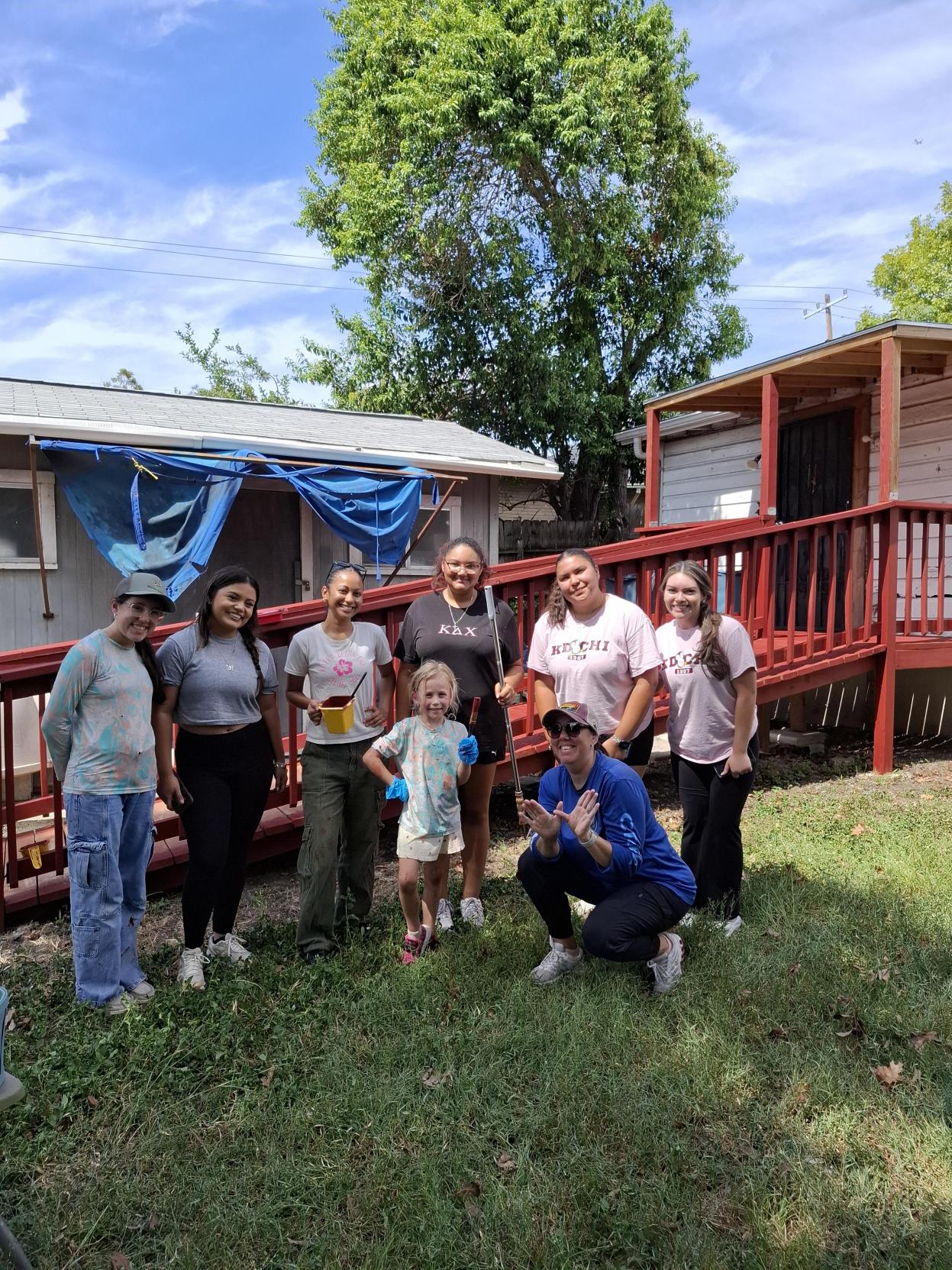
Our Lady of the Lake University students put service into action during September’s Service Saturday, helping improve accessibility and quality of life for older adults on San Antonio’s West Side.

Led by Dr. Jesse Harasta, director of OLLU’s Center for Service-Learning and Volunteerism, students from the Honors 2300 Community as Context class, as well as members of the Kappa Delta Chi sorority, partnered with Building Hope Together, a local nonprofit that helps low-income seniors remain safely and independently in their homes as they age.

During the service project, OLLU volunteers helped paint and stain two newly constructed accessibility ramps at West Side homes. 

For Dr. Laura Petersen, the project provided an opportunity for students to connect classroom discussions with the experiences of people in OLLU’s surrounding community.

“I wanted my students to see that the ideas we discuss in class have real consequences for real people,” Petersen said. “Service Saturday was a chance to step off campus and do something concrete for our local community.”

The Honors course asks students to examine issues such as food and financial insecurity and how they affect the West Side compared with other parts of San Antonio. Petersen said service-learning allows students to compare what they study in the classroom with lived experience while recognizing themselves as active members of a community rather than simply observers.

The accessibility ramp project also gave students a tangible example of how relatively small efforts can have a significant impact.

“A ramp is simple, but for a resident with limited mobility, it can mean getting to the doctor, the grocery store, or a family gathering without help,” Petersen said.

Petersen said students also had an opportunity to develop teamwork, problem-solving and humility while seeing firsthand how Building Hope Together identifies community needs, organizes volunteers and follows through on projects. The experience provided a more personal context for classroom discussions about equity, access and responsibility.

Following the project, students are reflecting on their experience through a written assignment and connecting the service work with an observation study underway in the course. Petersen said that combination helps students make purposeful connections between what they are studying and what they experienced in the community.

Petersen said she was particularly impressed by how quickly students organized themselves while painting and staining the ramps.

“Quiet students jumped right into the work, helped each other, and kept everyone’s spirits up despite the Texas heat,” she said.

The project also reflects OLLU’s long-standing connection to the West Side and its commitment to serving its neighbors.

“OLLU doesn’t exist in isolation; our students share these neighborhoods with residents who have lived here for decades,” Petersen said. “Understanding the challenges older adults face, like mobility, isolation, and aging in place, helps students become more thoughtful citizens and professionals.”

HNRS 2300 is a validated service-learning course, and this semester marks the first time the class has worked with Building Hope Together and House of Neighborly Services. Petersen said she hopes to continue those partnerships and identify additional opportunities that allow students to better understand course concepts through service and human experience.

Victoria Ramirez, a member of the Kappa Delta Chi sorority who participated in the service project, stressed that the project was meaningful because something as simple as a safe ramp can make a big difference in someone’s everyday life and help seniors feel safe and more independent.

“The most rewarding part was knowing that our time and efforts were directly helping someone in our community,” Ramirez said. “It was also rewarding to actually get to talk to one of the elderly women that we were helping and that she used to attend Our Lady of the Lake University.”

Most importantly, Petersen hopes students leave the experience understanding that meaningful service does not have to be large in scale.

“I hope that they learn that the act of service does not have to be ‘grand’ to matter — any small acts of service are just as purposeful,” she said. “Most of all, I hope they remember the people they served and carry that awareness into whatever work they do next.”

Harasta echoed that sentiment, stating, “Service Saturdays like this are a chance for us to get out of our University bubble and engage with the community around us, to get to know and serve our neighbors.”

Welcome, Drew Shelnutt, Director of the Center for Student Involvement

Please join us in welcoming Andrew “Drew” Shelnutt as OLLU’s Director of the Center for Student Involvement. Drew joined the university on September 14.

In this role, Drew leads the Center’s work with student organizations, student leaders, and campus programs. He will support opportunities for students to connect, develop leadership skills, and build a sense of belonging at OLLU.

Drew comes to OLLU after eight years at the University of Texas at San Antonio. Most recently, he worked in the Alvarez College of Business Student Success Center, providing career guidance and professional development support to undergraduate business students. He graduated from George Mason University in Fairfax, Virginia, in 2008 and from the Bush School of Government and Public Service at Texas A&M University in 2011.

Before his work at UTSA, Drew served as Director of Faith Formation at St. Helena Catholic Church in northeast San Antonio. He also spent many years volunteering as a catechist for learners ages 8 to 88. If you would like to nerd out about Catholic theology or simply say hello, stop by and meet Drew in Main 123!

OLLU Receives Federal Grants to Support High-Need Professions

Our Lady of the Lake University has received new federal funding to expand opportunities for students pursuing careers in special education, school psychology and social work while helping address workforce shortages in San Antonio and across Texas.

The funding includes $1.25 million over five years from the U.S. Department of Education’s Office of Special Education Programs for Project RISE—Research-Informed Interdisciplinary Scholar Preparation in Evidence-Based Practices.

Project RISE will provide need-based scholarships to approximately 54 students across three cohorts preparing to become special education teachers. Scholars may pursue Special Education Specialist EC–12 certification through undergraduate, accelerated Master of Arts in Teaching or Master of Education pathways. Participants also will receive clinical residency experience and preparation in evidence-based practices, co-teaching and inclusive instruction, with an emphasis on preparing graduates to serve high-need school districts.

OLLU will also participate in the Leadership Education in Neurodevelopmental and Other Related Disabilities (LEND) Program through a five-year, $177,302 subaward from the University of the Incarnate Word. The funding will support two long-term graduate trainees each year—one in School Psychology and one in Social Work—who will each receive a $10,000 annual stipend and complete at least 300 hours of interdisciplinary training. School Psychology faculty members Kristin O’Donnell, Ph.D., and Marlo Mitchell-Gonzales, Ph.D., will help mentor trainees and support specialized training, autism diagnostic clinics, and curriculum development.

Portrait of young female teacher helping group of little kids doing test work in school classroom copy space
By Seventyfour

“These awards reflect the strength of OLLU’s academic programs and our faculty’s commitment to preparing graduates for professions where highly trained practitioners are urgently needed,” Provost Alan Silva, Ph.D. said. “They also give our students meaningful opportunities to learn across disciplines, gain substantial clinical experience and translate that training directly into service for children, families and communities.”